


 Cart
Cart



Next Exhibitions
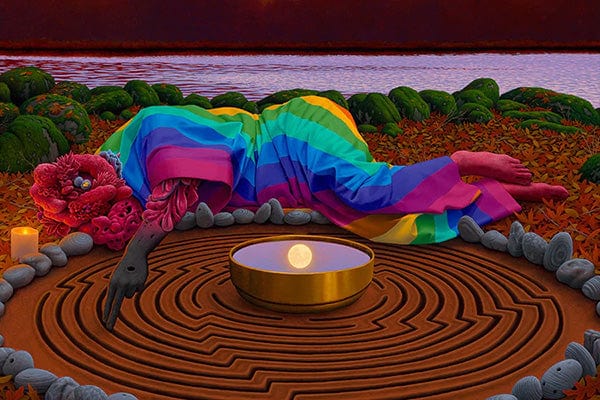
Adrian Cox - The Labyrinth of Unknowing
Opening reception: Apr 27th, 6 - 9pm
On view: Apr 28th - May 19th
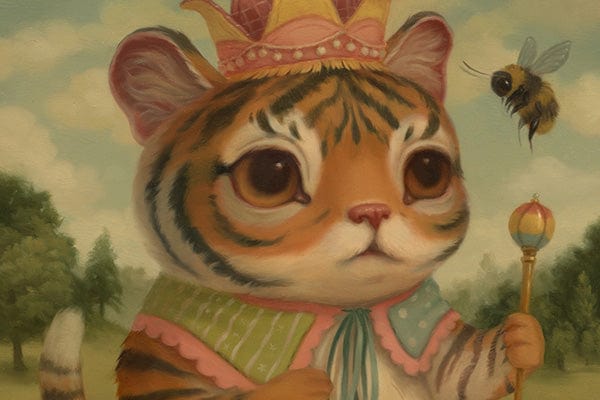
Katie Gamb - Misfit Toys
Opening reception: Apr 27th, 6 - 9pm
On view: Apr 28th - May 19th
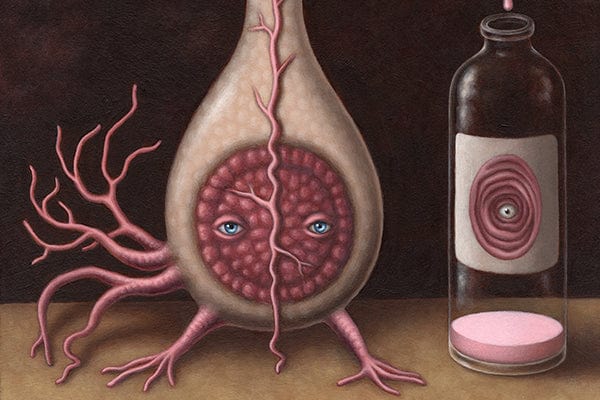
Catriona Secker - Artificial Subconscious
Opening reception: Apr 27th, 6 - 9pm
On view: Apr 28th - May 19th
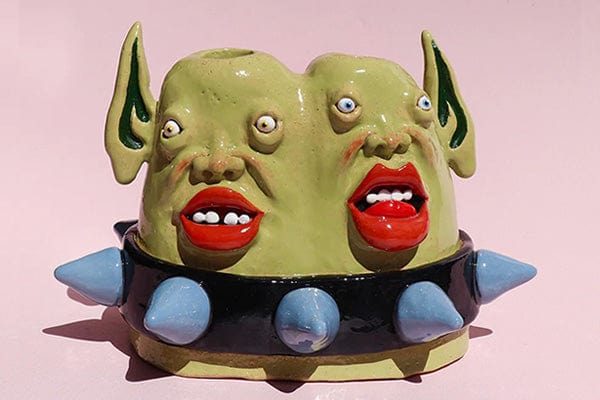
Ginklet - Ginklet’s World
Opening reception: Apr 27th, 6 - 9pm
On view: Apr 28th - May 19th
Upcoming Exhibitions
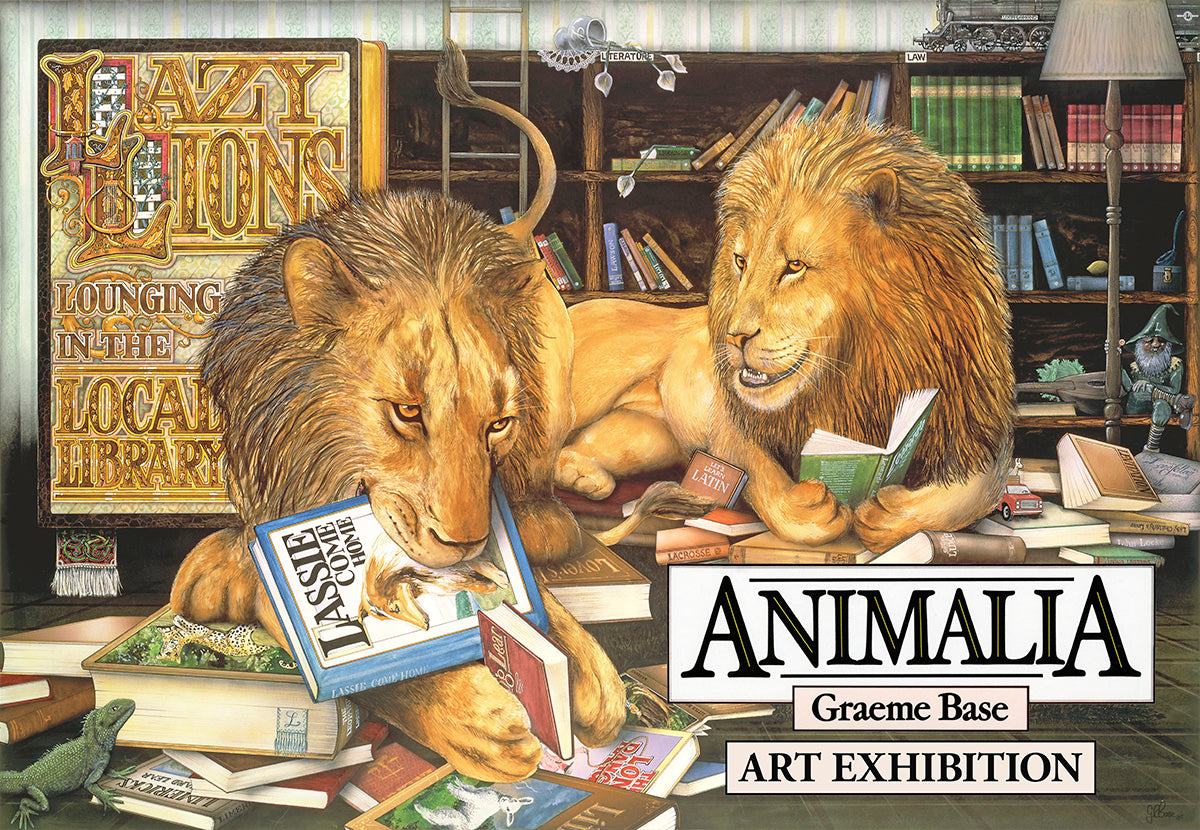
Graeme Base - Animalia
Opening reception: May 25th, 6 - 9pm
On view: May 26th - Jun 16th
Original Art Inventory
- Vasilisa Romanenko - "Interlude" - acrylic on canvas panel
- Clémentine Bal - "La Plante" - mixed media sculpture with aerosol, acrylic, crayon & pastel
- Alexis Savopoulos - "A Spirit of Spring's Rebirth" - stone clay, feathers, paper, preserved flowers and moss sculpture, wood and glass bell jar
- Calvin Ma - "Sway" - ceramic, glaze
- Jana Brike - "Nymph and Her Wildflowers" - oil on canvas, framed in custom frame with gold-leaf gilding
- Jana Brike - "Eve and the Garden" - oil on paper
- Jana Brike - "The Wayward Traveler" - oil on canvas
- Jana Brike - "The Wild Madonna and Her Daughter" - oil on linen
- Nom Kinnear King - "Fellowball" - oil on wood
- Nom Kinnear King - "Midnight Feast" - oil on wood
- Nom Kinnear King - "Lueven" - oil on wood
- Dolaana Davaa - "The Last Day Of Pompeii" - PU resin frame, tempera on wood
- Dolaana Davaa - "The Last Breath" - tempera on wood and wood pulp frame
- Erika Sanada - "Chikkoi Warrior - Boredom" - ceramic, cold finish
- Erika Sanada - "Chikkoi Warrior - Hana, Kaoru" - ceramic, cold finish
- Erika Sanada - "Konezumi 4" - ceramic, cold finish
- Erika Sanada - "Konezumi 12" - ceramic, cold finish
- Giorgiko - "In The Shadow" - oil on canvas
- Pickled Circus - "The Artful Snatcher" - epoxy clay, resin, metal, wood & vinyl Toddlerpillar
- Jessica Dalva - "Biblically Accurate Cherubim" - mixed media, epoxy clay, gold leaf, acrylic paint, vintage wooden base and vinyl Toddlerpillar
- Alejandro Pasquale - "La Muerte es una Ilusión (Death is an Illusion) " - oil on canvas
- S.V. Williams - "The Enigmatic Pines" - acrylic on birch wood
- S.V. Williams - "Light Of A Moonless Night" - acrylic on birch wood
- S.V. Williams - "Galaxy The Cat" - acrylic on canvas
- S.V. Williams - "The High And Wild" - acrylic on birch wood
- S.V. Williams - "Inner Basking" - acrylic on masonite
- Jason Limon - "Cosmic Coffin" - acrylic on panel
- Jason Limon - "Outlines" - acrylic on panel
- Jason Limon - "Stargaze" - acrylic on panel
- Jason Limon - "Infinite Glow" - acrylic on panel
- Meagan "Magpie" Rodgers - "Finding Solid Ground" - acrylic on wood
- Meagan "Magpie" Rodgers - "Agape" - acrylic on wood
- Meagan "Magpie" Rodgers - "Shadow of Oneself" - acrylic on board
- Meagan "Magpie" Rodgers - "Succumb" - acrylic on board
- Meagan "Magpie" Rodgers - "Louder Than Words" - acrylic on clay
- Hannakin - "Mycelia Sentinae" - wool felt, cotton thread, wire and mixed media under hand-blown glass dome with frosted glass base
- Jason Mowry - "Falling Nectar" - watercolor and gouache on watercolor paper
- Jason Mowry - "The Tangled and The Tentative" - watercolour, gouache & coloured pencils on paper
- Bill Mayer - "The Bird-Woman" - gouache on paper
- Sarah Joncas - "Trance" - oil and acrylic on panel
- Babs Webb - "Zérolière the Corporal" - powdered graphite and acrylic on bristol
- Andrea Guzzetta - "After a Long Winter, We Bloom" - oil on panel
- Stephanie Brown - "Here We Lie (With Violets)" - found frame, gouache and acrylic on paper
- Stephanie Brown - "Here We Lie (In Three Parts)" - found frame, gouache and acrylic on paper
- Stephanie Brown - "Here We Lie (Three Anchovy)" - found frame, gouache and acrylic on paper
- Alex Garant - "Gold Study 2" - Oil on cradled canvas panel
- Alex Garant - "Gold Study 1" - oil on cradled canvas panel
- Alex Garant - "Mist And Mirage" - oil on cradled canvas panel
- Alex Garant - "Heads In The Clouds" - oil on cradled canvas panel
- Alex Garant - "Is This a Dream Or a Mirage?" - oil on canvas
- Alex Garant - "Is this a Mirage Or a Dream?" - oil on canvas
- Alex Garant - "One For Comfort" - acrylic, acrylic marker on birch panel
- Alex Garant - "One For Love" - acrylic, acrylic marker on birch panel
- Alex Garant - "Drawing Blue Dreams" - pencil and marker on vellum paper
- Alex Garant - "Drawing Yellow Dreams" - pencil and marker on vellum paper
- Scott Listfield - "Pink flock" - oil on canvas
- Scott Listfield - "The City Has Eyes" - oil on canvas
- Scott Listfield - "Head In The Clouds" - oil on canvas
- Scott Listfield - "Moon And A Half" - oil on canvas
- Jennifer Allnutt - "The Happy Corpse" - oils on custom wood panel arch
- Jennifer Allnutt - "Oubliette" - oils on custom wood panel arch
- Jennifer Allnutt - "Hymn To Beauty" - oils on Wood Panel
- Jennifer Allnutt - "Every Silence" - oil on aluminium composite material
- Jennifer Allnutt - "Kindred" - oil on aluminum composite material (ACM)
- Ellen Sheidlin - "Noise Six" - oil on canvas
- Ellen Sheidlin - "Noise Seven" - oil on canvas
- Ellen Sheidlin - "Noise Four" - oil on canvas
- Ellen Sheidlin - "Noise Three" - oil on wood
- Ellen Sheidlin - "Whispering Florals" - ceramic sculpture
- Ellen Sheidlin - "Seed 3" - oil on canvas, ceramic frame and blurred glass
- Ellen Sheidlin - "Seed 4" - oil on canvas, ceramic frame and blurred glass
- Ellen Sheidlin - "Seed 5" - oil on canvas, ceramic frame and blurred glass
- Ellen Sheidlin - "Seed 6" - oil on canvas, ceramic frame and blurred glass
- Ellen Sheidlin - "Seed 10" - oil on canvas, ceramic frame and blurred glass
- Ellen Sheidlin - "Seed 12" - oil on canvas, ceramic frame and blurred glass
- Ellen Sheidlin - "Seed 13" - oil on canvas, ceramic frame and blurred glass
- Jesús Aguado - "Eyelashes of Pain" - acrylic on panel
- Jesús Aguado - "Emancipated Ear" - acrylic on cradled panel
- Jesús Aguado - "Emancipated Smell" - acrylic on cradled panel
- Jesús Aguado - "Pig Supplies" - acrylic on birch panel
- Jesús Aguado - "Hexapod" - epoxy clay and paint on vinyl Toddlerpillar
- Johnson Tsang - "Lucid Dream II: Crowded Mind" - porcelain
- Josh Keyes - "Red Snow" - acrylic on birch panel
- Super A - "Warped" - acrylic on linen
- Josie Morway - "Dawn" - oil on canvas
- Josie Morway - "Dusk" - oil on canvas
- Stephen Ives - "Carnage" - polymer clay, epoxies, plastic barbie horse, hacked model tank plus extra parts and hacked figures, resin curlicues, poly pipe plastic, wood, costume jewellery, bone, aluminium, wire, glues, gold leaf, graffiti sprays, acrylics
- Dewi Plass - "Stuck (through the motions)" - acrylic on cradled birch panel
- Dewi Plass - "Transform (the magic we create)" - acrylic on cradled birch panel
- Kathie Olivas & Brandt Peters - "Alive: 3 Tots in 1" - oil, acrylic, epoxy resin on UV resin, vinyl, and wood
- Gigi Chen - "Shimmer" - acrylic on wood
- Gigi Chen - "Let's Make This Work" - acrylic on wood panel
- Jeff Christensen - "Calling Forth Darkly" - oil on panel
- Jeff Christensen - "Headspace" - oil on canvas
- Jeff Christensen - "Draugr" - oil on board
- Selene Mauri Cochrane - "Crowbebeh" - ceramics, fabrics, wire, thread, handmade chainstitched lace, buttons & vinyl Toddlerpillar
- Selene M Cochrane - "Green With Envy" - Various fabrics, threads, wire, wading, ceramics, ceramic base, glass cloche, pins
- Selene M Cochrane - "Intestines" - Various fabrics, wading, ceramics, thread, wire, handmade chainstitched lace and wool felt backing
- Selene M. Cochrane - "Anonymous Anomalous" - various fabrics, wool felt, wire, ceramics, pins, human hair, thread, handmade chainstitch lace trim
- John Brosio - "Tornado Study 3" - oil on panel
- John Brosio - "Tornado Study 5" - oil on panel
- Wiley Wallace - "Going Away" - acrylic on panel
- Wiley Wallace - "End Together" - acrylic on panel
- Wiley Wallace - "Clement Core" - acrylic on panel
- Wiley Wallace - "Canyon Search" - acrylic on panel
- Wiley Wallace - "Sharing With" - acrylic on panel
- Wiley Wallace - "All Over" - acrylic on panel
- Wiley Wallace - "Passing Through" - acrylic on panel
- Wiley Wallace - "Bright Night" - acrylic on panel
- Wiley Wallace - "Lighting Dusk" - acrylic on panel
- Wiley Wallace - "Prism Sunrise" - acrylic on panel
- Wiley Wallace - "Meeting Reflections" - acrylic on panel
- Briana Hertzog - "A Day of Rest" - oil on canvas
- Briana Hertzog - "Little Green Man" - epoxy clay, primer & acrylic paint on vinyl Toddlerpillar
- Diogo Monteiro - "The Little Hugger" - resin with acrylic paint and varnish on a wooden base
- Bayard Baudoin - "The Golden Homunculus" - fiberglass Resin, acrylic and mixed media
- Annita Maslov - "The Messenger"- pen and ink on paper
- Annita Maslov - "Paoxiao" - oil on Panel
- Hannah Chatham - "The Biter" - porcelain teeth, dental acrylic resins
- Helice Wen - "On The Nature of Daydreaming No. 4" - oil and acrylic on wood panel
- QimmyShimmy - "Taiyaki (tuna)" - Mixed media
- QimmyShimmy - "Strawberry Parfait" - mixed media
- Adrian Cogiel - "Toddlerspore" - Epoxy putty, acrylic paint & vinyl Toddlerpillar
- Jeremy Enecio - "Satyr" - graphite and white charcoal on paper
- Lix North - "Gilt" - oil on aluminium
- Brooke Weston - "Blue Delft Roe Deer Skull" - roe deer skull, resin, clay and paint
- Brooke Weston - "Castle Roe Deer Skull" - roe deer skull, resin, clay and paint
- Marco Mazzoni - "Happy" - colored pencils on paper
- Natalia Fabia - "Indulge Me" - oil on panel
- Nicole Evans - "Equilibrium" - oil on cradled birch panel
- Stella Im Hultberg - "Bimuri" - jagae (mother of pearl) & acrylic on clay and wood
- Stella Im Hultberg - "Unremembered Stories" - jagae (mother of pearl) & acrylic on clay and wood
- Marina Dieul - "Petit Souris 594" - oil on board
- Marina Dieul - "Petit Souris 597" - oil on board
- Stephanie Kilgast - "Read Your Greens" - mixed media on reclaimed book
- Stephanie Kilgast - "Rainbow Buddha (Toddlerpillar Customisation)" - mixed Media and vinyl Toddlerpillar
- Adam Stoner - "Seated Figure with Screen and Chair" - oil on birch panel
- Brian Mashburn - "Somniferum" - oil on panel
- Brian Mashburn - "Black Cat Among Wildflowers" - oil on panel
- Brian Mashburn - "Jeep Cherokee" - oil on canvas
- Brian Mashburn - "A Bear in the Woods" - oil on panel
- Brian Mashburn - "Wolf" - oil on panel
- Brian Mashburn - "Owl with Titmouse" - oil on panel
- Brian Mashburn - "Cardinal 1" - oil on panel
- Brian Mashburn - "Pigs" - oil on panel
- Brian Mashburn - "Forest Scene 1" - oil on panel
- Brian Mashburn - "Cardinal 2" - oil on panel
- Brian Mashburn - "Two Trees" - oil on panel
- Brian Mashburn - "Forest Scene 2" - oil on panel
- Brian Mashburn - "Squirrel 1" - oil on panel
- Brian Mashburn - "Toucan" - oil on panel
- Brian Mashburn - "Squirrel 2" - oil on panel
- Brian Mashburn - "Wading Heron" - oil on panel
- Brian Mashburn - "Racoons" - oil on panel
- Brian Mashburn - "A Hole in the Sky" - oil on panel
- Brian Mashburn - "Black Kitten" - oil on panel
- Jeff Gillette - "Mickey Bomb" - acrylic and collage on wood panel
- Jeff Gillette - "ATAT Couple" - acrylic on wood panel
- Ben Howe - "Tangle" - oil on panel
- Ben Howe - "Permanent Rose" - oil on panel
- Ben Howe - "Rapture" - oil on panel
- Sarah Dolby - "Cinderella" - oil on linen
- Sarah Dolby - "Madame Melancholy's Opera in the Garden" - oil on linen
- Sarah Dolby - "Hush" - oil on linen
- Sarah Dolby - "Under the Titi Tree" - graphite and ink
- David Welker - 'Protector' - pen and ink on paper
- David Welker - 'Moving Day' - pen and ink on paper
- David Welker - 'Nano Chroma' - acrylic on canvas
- Zarina Situmorang - "Choice #2" - oil on canvas
- Zarina Situmorang - "Peony" - oil on canvas
- Zarina Situmorang - "Sharing" - oil on canvas
- Zarina Situmorang - "Support" - oil on canvas
- Zarina Situmorang - "The One" - oil on canvas
- Kazuhiro Hori - "Reflection" - acrylic on canvas
- Julia A. Rich - "Sisters Not Twins - THE ANG3L" - acrylic on canvas
- Julia A. Rich - "Sisters Not Twins - THE D3VIL" - acrylic on canvas
- Adrian Borda - "Hedonic Treadmill" - oil on canvas
- Adrian Borda - "The Silver Coil" - oil on board
- Adrian Borda - "Beyond The Pleasure Principle" - oil on canvas
- Adrian Borda - "Facing Myself" - oil on canvas
- Ed Binkley - "Goblin Incognito, New Haircut" - coloured pencil and white charcoal on toned paper
- Ed Binkley - "Goblin Incognito, Whiskers" - colored pencil and white charcoal on toned paper
- Ed Binkley - "Sorcerer" - coloured pencil and white charcoal on toned paper
- Ed Binkley - "Vicar, Bad Hair-Day" - colored pencil and white charcoal on toned paper
- Ed Binkley - "Prophecy Veil"- colored pencil and white charcoal on toned paper
- Ed Binkley - "Werewolf Incognito, Formal Attire" - colored pencil and white charcoal on toned paper
- John Walker - "Boney Bunny From the Heart" - acrylic on panel
- John Walker - "Midnight Musicologists" - acrylic on panel
- John Walker - "Odd Travelers - A Question of Balance" - acrylic on panel
- John Walker - "Professor Moonflower And His Bee" - acrylic on panel
- John Walker - "The Xylabone Player" - acrylic on panel
- John Walker - "Gwendolyn and the Very Special Tea" - acrylic on panel
- John Walker - "Hearts Desires" - acrylic on panel
- John Walker - "Songbirds" - acrylic on panel
- John Walker - "Tall Tales Told" - acrylic on panel
- John Walker - "The Firebird" - mixed media on Strathmore 500 board
- John Walker - "The Sorcerer's Hat" - acrylic on panel
- John Walker - "The Squonk Hunter" - acrylic on panel
- Ed Binkley - "Blue Metamorpho" - colored pencil and acrylic on paper mounted to board
- Alessandro Boezio - "Chaos 2" - white ceramic glazed
- Alex Kuno - "Peace and Quiet" - watercolour on paper and panel, sealed in wax.
- Alex Kuno - "Wait It Out" - oil and graphite on paper mounted on arched panel
- Alexia Novella - "Libertine" - oil on panel
- Alexia Novella - "Unnatural" - oil on panel
- Allison Sommers - "Death" - gouache & mixed media on panel-mounted paper
- Allison Sommers - "The Penalties and Privileges of Her Position" - gouache on paper in mixed media paper altarpiece
- Andrew Hopgood - "The Bear" - oil on linen
- Ellen Jewett - "Our Delicate Equilibrium" - air drying polymer, epoxy resin, glass, acrylic, mineral powder
- Christophe Gilland - "Boletus Edulis with Blue Ringed Octopus" - polymer clay, wood, acrylics, resin and glass dome
- Christophe Gilland - "Veiled Stinkhorn" - polymer clay, wood, acrylics, resin and glass dome
- Jolene Lai - "Abduction" - oil on wood panel
- Kyoung Ik Min - "Cloning Report- Nature’s DNA USB No 230522(C)" - cedrela sinensis, stainless steel, nuts & bolts
- Edith Lebeau - "I'm Trying My Best" - acrylic on panel
- Kit Mizeres - "The Fisherman" - watercolour and gouache on paper
- Feliks Creation - "Auburn Flower" - polymer clay, resin, mounted on fibreboard
- Marc Burckhardt - "Venus" - acrylic and oil on wood
- Michael Reedy - "Mother" - acrylic and gouache on panel
- Michael Reedy - "Theia" - acrylic, gouache, and googly eyes on panel
- Yu-Chun Ma - "Morris" - acrylic on linen
- David Ramsden - "Proteus" - oil on panel
- Owen Smith - "Made Man" - oil on board
- Allison Reimold - "Daydream in the Garden" - oil on board
- Erlend Tait - "Larch (Spring)" - oil on linen panel
- Erlend Tait - "Larch (Autumn)" - stained glass with light panel
- Raúl Guerra - "Maya" - acrylic and color pencils on 300 GSM illustration paper
- Ronit Baranga - "The Intimate Series (2023) #1" - clay, glaze, acrylic paint, lacquer
- Ronit Baranga - "The Intimate Series (2023) #4" - clay, glaze, acrylic paint, lacquer
- Ronit Baranga - "The Intimate Series (2023) #5" - clay, glaze, acrylic paint, lacquer
- Ronit Baranga - "The Intimate Series (2023) #6" - clay, glaze, acrylic paint, lacquer
- Ronit Baranga - "The Intimate Series (2023) #7" - clay, glaze, acrylic paint, lacquer
- Ronit Baranga - "The Intimate Series (2023) #8" - clay, glaze, acrylic paint, lacquer
- Ronit Baranga - "Embraced in Frame #1" - clay, glaze, acrylic paint, lacquer, wooden frame
- Ronit Baranga - "Embraced in Frame #2" - clay, glaze, acrylic paint, lacquer, wooden frame
- Ronit Baranga - "Embraced in Frame #3" - clay, glaze, acrylic paint, lacquer, wooden frame
- Ronit Baranga - "Embraced in Frame #4" - clay, glaze, acrylic paint, lacquer, wooden frame
- Sean Layh - "Oedipus at Colonus" - oil on panel
- Emma Black - "The Last Thing" - oil on board
- Emma Black - "Eulogy" - oil on cradled wood
- Emma Black - "This Won't End" - oil on board
- Emma Black - "I Can Feel Winter Setting In" - oil on board
- Emma Black - "Chrysalis" - polymer clay and oil paint on vinyl Toddlerpillar
- Amber Cowan - "Snail in Jadeite Swamp" - glass and mixed media
- Andrew Cadima - "Placitum" - oil on panel
- Andrew Cadima - "All of Us" - oil on panel
- Andrew Cadima - "An Endless Well" - oil on panel
- Andrew Cadima - "And It Came for Everything" - oil on panel
- Andrew Cadima - "And No One Survived" - oil on panel
- Andrew Cadima - "And Then It Appeared" - oil on panel
- Andrew Cadima - "Miracle" - oil on panel
- Andrew Cadima - "The Night We Were Judged" - oil on panel
- Erik Sherman - "Epicormic Growth" - oil on wood panel
- Erik Sherman - "Sunrise" - oil on canvas
- Erik Sherman - "Sunset" - oil on canvas
- Erik Sherman - "Aphelion" - oil on panel
- Erik Sherman - "Perihelion" - oil on panel
- Erik Sherman - "Aurora" - oil on canvas
- Erik Sherman - "Goldilocks zone II" - oil on board
- Shaun Tan - Royal Commission (2018) - coloured pencil and ballpoint pen on paper
- Shaun Tan - "Just Do What They Tell You" - pastel and charcoal on paper
- Shaun Tan - "Foundling" - pastel and charcoal on paper
- Shaun Tan - "Orca" - oil on canvas
- Shaun Tan - "A Day in the Life" - coloured pencil and pen on paper
- Shaun Tan - "Bluebell" - oil on canvas
- Shaun Tan - "Cicada"- resin and oil paint - limited edition of 50
- Shaun Tan - "Crow Train" (2017) - pencil on paper
- Shaun Tan - "Enemies (after Goya)" - pastel and charcoal on paper
- Shaun Tan - "Factory Workers" - acrylic, oil and paper collage on canvas
- Shaun Tan - "Fearless" - acrylic and oil on canvas
- Shaun Tan - "Head: Cypress" (2012) - oil on board
- Shaun Tan - "Head: Nocturne" (2012) - oil on board
- Shaun Tan - "Head: Patience" (2012) - oil on board
- Shaun Tan - "Head: Red Contentment 2" (2012) - oil on board
- Shaun Tan - "Head: Tomb" (2016) - pastel on paper
- Shaun Tan - "Jacaranda" - acrylic, oil and paper collage on canvas
- Shaun Tan - "Lungfish" - plaster, acrylic and wax - limited edition of 20.
- Shaun Tan - "On My Way to Paradise" - acrylic and oil on canvas
- Shaun Tan - "Pilgrims" - pen and graphite pencil on paper
- Shaun Tan - "Preparations" - pastel on paper
- Shaun Tan - "Tea Ceremony" - pencil on paper
- Shaun Tan - "Amorous Dial Duck" - pencil on paper
- Shaun Tan - "The Farm" - pen, pencil, acrylic and collage on paper
- Shaun Tan - "Soothsayer" - pen and coloured pencil on paper
- Shaun Tan - "Tender Morsels" - oil and acrylic on paper
- Shaun Tan - "Terminal" - acrylic and oil on canvas
- Shaun Tan - "The Good Listener" - pen and pencil on paper
- Shaun Tan - "The Harpy" - pastel on paper
- Shaun Tan - "The Kingdom" - acrylic, oil and paper collage on canvas
- Shaun Tan - "The New World" - acrylic, oil, paper and fabric collage on canvas
- Shaun Tan - "The Quiet Town" - oil on canvas
- Shaun Tan - "The River of Time" - graphite pencil on paper
- Shaun Tan - "The Shark" - oil on canvas
- Shaun Tan - "The White Road" - charcoal and pastel on paper
- Shaun Tan - "The World Without Us" - charcoal and pastel on paper
- Shaun Tan - "Theoretical Physicist" - pencil and coloured pencil on paper
- Shaun Tan - "True Self" - charcoal and pastel on paper
- Shaun Tan - "Underworld" - charcoal and pastel on paper
- Shaun Tan - Lost Thing film TV ad - Troublesome artifacts of unknown origin (2009) - pencil on paper
- Shaun Tan - Lost Thing film TV ad - Unclaimed property (2009) - pencil on paper
- Shaun Tan - Lost Thing film TV ad - We’ve got a pigeonhole to stick it in (2009) - pencil on paper
- Shaun Tan - Lost Thing film TV ad – Objects without name (2009) - pencil on paper
- Shaun Tan - "Some are More Equal Than Others" - paper, clay, acrylic and oil paint
- Beau White - "Bubble O' Bill on Potato Chips" - oil on board
- Beau White - "Not A Robot" - oil on board
- Beau White - "10 Pack" - oil on board
- Beau White - "Big Toe" - oil on board
- Beau White - "Chance Meeting" - oil on board
- Beau White - "Missing In Action" - oil on board
- Beau White - "Once Upon A Time" - oil on board
- Beau White - "One Toe In The Grave" - oil on board
- Beau White - "What's Inside A Tardigrade?" - epoxy clay, polymer clay, plastic toothpicks, oil paint & vinyl Toddlerpillar
- Bethany Krull - "Green Snake Anomaly" - porcelain, glaze and aluminium
- Brad Gunn - "Voog (trance)" - resin, synthetic fibres
- Brad Gunn - "Flopsy (emerald)" - resin, synthetic fibres
- Brad Gunn - "Flopsy (Mustard)" - Resin, Synthetic fibres
- Brad Gunn - "Flopsy Centrefold (Mauve)" - resin, synthetic fibres
- Brad Gunn - "Flopsy Hang (Purple)" - resin, synthetic fibres
- Brad Gunn - "Flopsy Hang (Sunset)" - resin, synthetic fibres
- Brad Gunn - "Mortem (Autumn)" - resin, synthetic fibres
- Brad Gunn - "Plume (Blue)" - resin, synthetic fibres
- Brad Gunn - "Pubo (Lime)" - resin, synthetic fibres
- Brad Gunn - "Sodom (Black)" - resin, synthetic fibres
- Brad Gunn - "Stigmartyr" - resin, synthetic fibers & paint
- Brad Gunn - "The Lush (Wine)" - resin, synthetic fibres, acrylic paint
- Brad Gunn - "Voog (cerise)" - gypsum, synthetic fibres, resin
- Brad Gunn - "Voog (Emerald)" - gypsum polymer, synthetic fibres & resin
- Julian Clavijo - "Emerging From Water And Land" - enamel and oil on wood blocks
- Julian Clavijo - "Rising" - enamel and oil on wood blocks
- Julian Clavijo - "Stardust Aren't We All?" - enamel and oil on wood blocks
- Julian Clavijo - "Monument to Happiness" - epoxy clay, polymer clay, vinyl Toddlerpillar and acrylic paint
- Julian Clavijo - "Radiance" - enamel and oil on wood blocks
- Julian Clavijo - "Luminous" - enamel and oil on wood blocks
- Julian Clavijo - "Glow" - enamel and oil on wood blocks
- Julian Clavijo - "Ethereal" - enamel and oil on wood blocks
- Catriona Secker - "Forest Dwellers" - acrylic on cradled birch panel
- Catriona Secker - "Biomorph, Evolved from Mollusc" - acrylic on cradled birch panel
- Catriona Secker - "Biomorph, Evolved from Sea Anemone" - acrylic on cradled birch panel
- Catriona Secker - "Connections" - graphite on paper
- Catriona Secker - "Tryst" - acrylic on linen panel
- Catriona Secker - "Anatomy of a Toddlerpillar" - vinyl toy, acrylic paint and wool fibre
- Chris Leib - "Cook Out" - oil on panel
- Chris Leib - "Star Spawn" - oil on panel
- Chris Leib - "Moon Queen" - oil on panel
- Chris Leib - "Guardian" - oil on canvas
- Chris Leib - "A Day Of Night" - oil on panel
- Chris Leib - "Flower Queen" - oil on canvas
- Chris Leib - "In The Meadow" - oil on panel
- Chris Leib - "Janus Complex" - oil on panel
- Chris Leib - "Lookout" - oil on panel
- Chris Leib - "Midnight Snack" - oil on panel
- Chris Leib - "Nothing Besides Remains" - oil on panel
- Chris Leib - "Silvery Queen" - oil on panel
- Chris Leib - "Voice" - oil on canvas
- Chris Leib - "Media Vita in Morte Sumus (In the Midst of Life we are in Death)" - oil on panel
- Chris Leib - "Winter Ape Nocturne" - oil on panel
- Chris Leib - 'Epilogue (chorus)' - oil on panel
- Chris Leib - 'Lollipop Coup' - oil on panel
- Chris Leib - 'Mind Lock' - oil on panel
- Chris Leib - 'Tel Megiddo' - oil on panel
- Chris Leib - "Tantrum" - epoxie clay, acrylic, coloured pencil and vinyl Toddlerpillar
- Dan Lydersen - "I Was Born and I Was Dead" - oil on round cradled wood panel
- Dan Power - "Dirt" - pen & ink on paper
- Daniel Bilmes - "Veiled V" - oil on cradled wood panel
- Dave Lebow - "The Request" - oil on linen board
- Dos Diablos - "The Savage Child" - oil on aluminum
- Dos Diablos - "Demon With A Golden Fork" - oil on aluminum
- Dos Diablos - "The Conjure for the Resurrected" - oil on aluminum
- Dos Diablos - "The Conqueror (Jaibo)" - oil on aluminum
- Dos Diablos - "The Beginning Of The Fire" - oil on aluminum
- Dos Diablos - "Disolución" - oil on canvas
- Dos Diablos - "The Giaour" - oil on cotton canvas
- Dusty Ray - "Offering" - oils on cradled birch panel
- E.E. Kono - "Seasann" - egg tempera on panel
- El Gato Chimney - Untitled 02A - watercolour and gouache on paper
- Lo Chan Peng - "Norwegian Wood" - ink, acrylic and calcium carbonate on canvas
- Isabel Peppard - "The End of Silence" - silicone, wood and artists own hair
- Jai Raphael - "Chrysalis" - oil on canvas
- Jai Raphael - "Phantasmagoria" - oil on canvas
- Jai Raphael - "Seed" - oil on canvas
- Jai Raphael - "Womb" - oil on canvas
- James Bonnici - "Composition in Green and Yellow" - oil on linen
- Jale Soysal - "Propensity" - epoxy clay, acrylics, varnish and metal
- Jale Soysal - "Host" - epoxy clay, polymer clay, resin, acrylic paint, gloss varnish and vinyl Toddlerpillar
- Xue Wang - "Forget Me Not" - oil on board
- Hirabayashi Takahiro - "Source of the World" - oil on panel
- Thomas A. Gieseke - "In and Of Itself" - acrylic on panel
- Jason Briggs - "Picasso" - porcelain
- Jason Briggs - "Tera" - porcelain and steel
- Dan Seagrave - "Atrophy-Harvest" - acrylic on clayboard
- Dan Seagrave - "Carbonised Karma" - acrylic on clayboard
- Jason Stewart - "Untitled" - graphite on paper
- John M. Lally - "Night Pangs" - oil on board
- John M. Lally - "Slumber" - oil on ACM
- Kim Evans - "Dream Watchers II" - acrylic on cradled panel
- Kim Evans - "Dreamfree" - acrylic on cradled panel
- Kim Evans - "Moon Tales" - acrylic on cradled panel
- Kim Evans - "Mother Tongue - Dialogue" - acrylic on cradled panel
- Kim Evans - "Mother Tongue I" - acrylic on cradled panel
- Kim Evans - "Mother Tongue II" - acrylic on cradled panel
- Kim Evans - "No Words" - acrylic on cradled panel
- Kim Evans - "Nurture" - acrylic on cradled panel
- Kim Evans - "Rainmaker" - acrylic on cradled panel
- Kim Evans - "Re-Connection" - acrylic on cradled panel
- Laurie Hogin - "Addiction Medicine" - oil on panel
- Laurie Hogin - "The Warmth of the Sun" - oil on linen canvas
- Laurie Hogin - "Winter is Coming" - oil on linen canvas
- Linnea Strid - "Raindrops" - oil on paper
- Linnea Strid - "Remembering You" - oil on panel
- Linnea Strid - "The Tempest of Truth" - oil on panel
- Linnea Strid - "What The Heart Needs" - oil on panel
- Linnea Strid - "No Gods, No Masters" - oil paint, acrylics, spray paint, fixit sculpt and vinyl Toddlerpillar
- Mark Seabrook - "Easy Rider" - oil on cradled wood panel
- Mark Seabrook - "Mad Max: Jim Goose" - oil on cradled wood panel
- Mark Seabrook - "Rumble Fish" - oil on cradled wood panel
- Mark Seabrook - "The Great Escape" - oil on cradled wood panel
- Mark Seabrook - "The Wild One" - oil on cradled wood panel
- Masao Kinoshita - "Metanatomy - Six Armed Ganesha" - terracotta, metal & acrylic paint
- Masao Kinoshita - "Half Bone Panda" - acrylic paint on terracotta
- Masao Kinoshita - "Half Bone Rabbit" - acrylic paint on terracotta
- Masao Kinoshita - "Komainu Alpha (Shrine Guardian Dog)" - acrylic paint on terracotta
- Masao Kinoshita - "Komainu Omega (Shrine Guardian Dog)" - acrylic paint on terracotta
- Masao Kinoshita - "Metanatomy Boxer" - acrylic paint on terracotta
- Masao Kinoshita - "Metanatomy Mi-Ke" - acrylic paint on terracotta
- Masao Kinoshita - "Parrot Woman Torso" - acrylic paint on terracotta
- Masao Kinoshita - "Rabbit Woman Torso" - acrylic paint on terracotta
- Masao Kinoshita - "Corpse Bride - Parrot Woman" - Pencil on paper
- Deiter Barry - "Stargazer" - resin and vinyl
- Deiter Barry - "Stone Pup" - urethane, resin, vinyl and acrylic
- Deiter Barry - "Albino River Kelpie" - urethane, resin, paint and vinyl
- Michael Kennedy - "Sorrow for the Werebley-Bun" - oil on canvas
- Michael Kennedy - "Daikon Dreams" - oil on canvas
- Jackson Booth - "Fractured" - oil on wood
- Jacqueline Butterworth - "Baby It's a Wild World" - oil on canvas
- Matt Ritchie - "Red" - Acrylic paint, wood, felt & plexiglass
- Mei Mei - "Weep Boy" - air dry clay, acrylic paint, pigment, wood base, animal fur & vinyl Toddlerpillar
- Mei Mei - "Back from Extinction" - needle felted wool and modelled clay cast in resin, hand painted
- Michael Camarra - "Augur" - acrylic on wood panel
- Michael Camarra - "Harbinger" - acrylic on wood panel
- Michelle Avery Konczyk - "Over and Over Again" - Watercolor on paper, mounted to custom-cut panel, varnished
- Michelle Avery Konczyk - "Poison For Your Heart" - watercolor on paper mounted on custom-cut wood panel, varnished
- Nick Sheehy - "The Needle" - graphite and watercolour on paper
- Pamela Wilson - "Europa's Last Blossom" - oil on linen over aluminium
- Pamela Wilson - "Orbital Surrenders" - oil on linen over aluminium
- Redd Walitzki - "Rite of Spring" - oil and mixed media on lasercut panel
- John Chen - "Forsaken" - UV Resin, acrylic paint and beeswax varnish - edition of 3
- John Chen - "Charon" - UV Resin, acrylic paint, and beeswax varnish - edition of 3
- John Chen - "Succubus" - UV resin, acrylic paint, beeswax varnish - edition of 3
- John Chen - "Speak Your Mind" - UV resin, oil paint and matte varnish - edition of 3
- John Chen - "Spawn" - resin, acrylic & oil paint. limited edition of 3
- John Chen - "The Glutton (white base)" - UV resin and oil paint - limited edition of 3
- Robert Duxbury - "Path of Desire" - oil on canvas mounted on panel
- Robert Duxbury - "In This Solemn Place" - acrylic on canvas mounted on panel
- Robert Duxbury - "Oyster" - watercolour on watercolour paper mounted on panel
- Robyn Rich - "Charli" - oil on vintage spoon
- Robyn Rich - "Claire 1" - oil in vintage tin
- Robyn Rich - "Claire 2" - oil in vintage tin
- Robyn Rich - "Elisabeth, Inspired By A Portrait By Elisabeth Louise Vigée Le Brun" - oil in vintage tin
- Robyn Rich - "Elizabeth" - oil on vintage spoon
- Robyn Rich - "Ella" - oil on vintage tin lid
- Robyn Rich - "Wendie, 'The bright little needle.'" - oil in vintage tin
- Robyn Rich - "Hudson" - oil in vintage tin
- Robyn Rich - "Robyn, 'Nasturtium: victory in struggle.'" - oil in vintage tin
- Robyn Rich - "Robyn, 'Banksia: strength in resilience.'" - oil in vintage tin
- Robyn Rich - "Michèle, 'Being a goofball is underrated.'" - oil in vintage tin
- Robyn Rich - "Dave" - oil on vintage spoon
- Robyn Rich - "Joanna, 'Vous et Nul Autre (You and No Other).'" - oil in vintage tin
- Robyn Rich - "Nicole, 'Sitting on my bed late at night.'" - oil in vintage tin
- Robyn Rich - "Liz, 'If I hide it, it gets worse, I can’t hide what goes on inside.'" - oil in vintage tin
- Robyn Rich - "Thomas, 'Possum, 8 weeks. I am here, I love you.'" - oil in vintage tin
- Robyn Rich - "Zeke, 'The eyes of wisdom beyond his years.'" - oil on vintage spoon
- Robyn Rich - "Jenny, 'Time to think. How lucky I am.'" - oil in vintage tin
- Robyn Rich - "Lisa, 'Sometimes my fears, scars and sadness melt through my eyes for all to see.'" - oil in vintage tin
- Robyn Rich - "Maria, 'Invisible grey haired woman, no one can see me.'" - oil in vintage tin
- Robyn Rich - "Sandra" - oil in vintage tin
- Robyn Rich - "J." - oil in vintage tin
- Robyn Rich - "Zion, 'The eyes of wild innocence.'" - oil on vintage spoon
- Robyn Rich - "Robyn, 'I not only see you, but I hear you too.'" - oil in vintage tin
- Robyn Rich - "Robyn, 'It’s me, the person who painted these pieces.'" - oil in vintage tin
- Robyn Rich - "Franz Xaver, Inspired By A Franz Xaver Winterhalter Painting, 1863" - oil in vintage mini tart tin
- Robyn Rich - "Gab" - oil on vintage spoon
- Robyn Rich - "In Pieces #5, Eye, Inspired by a Franz Xavier Winterhalter painting of Countess Natalia Alexandrovna 1864" - oil in vintage tin
- Robyn Rich - "Jack" - oil in vintage tin
- Robyn Rich - "Jenny" - oil on vintage spoon
- Robyn Rich - "Jess" - oil in vintage tin
- Robyn Rich - "Joy" - oil on vintage spoon
- Robyn Rich - "Leyla" - oil in vintage tin
- Robyn Rich - "Leyla" - oil on vintage spoon
- Robyn Rich - "Margaret" - oil in vintage tart tin
- Robyn Rich - "Marthe, Inspired By A Portrait By Jean-Étienne Liotard" - oil on vintage spoon
- Robyn Rich - "Michael" - oil in vintage tin
- Robyn Rich - "Michelle 2" - oil on vintage spoon
- Robyn Rich - "Ariane" - oil on vintage spoon
- Robyn Rich - "Emile 1, Inspired By A Painting 'A Tender Embrace', 1887" - oil in vintage tart tin
- Robyn Rich - "Etta" - oil on vintage serving spoon
- Robyn Rich - "Harriet" - oil in vintage tin
- Robyn Rich - "In The Shadows (Self Portrait), 2022" - oil in vintage tin
- Robyn Rich - "Patricia" - oil on vintage tin lid
- Robyn Rich - "Ruby" - oil in vintage tin
- Robyn Rich - "Samm" - oil in vintage tin
- Robyn Rich - "Sue" - oil on vintage spoon
- Robyn Rich - "Wanda 1" - oil on vintage spoon
- Myriam Tillson - "The Beacon" - acrylic on paper
- Allen Williams - "Untitled" - oil on board
- Allen Williams - "Homunculus" - graphite on paper
- Allen Williams - "Harpy" - oil on board
- Allen Williams - "Storytime" - graphite on paper
- Allen Williams - "Revelation II" - oil on board
- Allen Williams - "The Narrow Man" - graphite on paper
- Allen Williams - "The Demon of Shame" - graphite on paper
- Allen Williams - "Ceryneian" - oil on oil paper
- Allen Williams - "Winged One" - graphite on paper
- Allen Williams - "Somnous II" - oil on board
- Allen Williams - "Laugh" - oil on board
- Allen Williams - "The Open Hand" - graphite on paper
- Allen Williams - "Nox" - oil on board
- Allen Williams - "The Seated Man" - oil on oil paper
- Allen Williams - "The Cross'd Star" - graphite on paper
- Allen Williams - "Cernunnos" - oil on board
- Allen Williams - "Teeth" - graphite on paper
- Allen Williams - "The Herald" - oil painting on linen board
- Allen Williams - "Inner Thought" - oil on board
- Salavat Fidai - "Demogorgon" - Pencil micro-sculpture
- Salavat Fidai - "Pencilpillar" - Pencil micro-sculpture
- Salavat Fidai - 'Food Chain' - pencil micro-sculpture
- Salavat Fidai - 'WALL-E' - pencil micro-sculpture
- Salavat Fidai - "Rose Skull" - pencil micro-sculpture
- Salavat Fidai - "White Skull" - pencil micro-sculpture
- Salavat Fidai - "Red Skull" - pencil micro-sculpture
- Sam Yong - "Burial" - oil on wood panel
- Sam Yong - "Mother" - oil on wood panel
- Samantha Dennis - "Armadillidium (5 pieces)" - glazed ceramic, sterling silver, epoxy, & steel
- Sonya Palencia - "Lapin’s Lament" - oil on wood panel
- Sonya Palencia - "Night Bloom" - oil on wood panel
- Sonya Palencia - "Quelling of the Swarm" - oil on wood panel
- Troy Brooks - "Shallow Rose" - oil on canvas
- Troy Coulterman - "Out in the Wild"- painted resin
- Troy Coulterman - "Watching and Waiting"- painted resin
- Troy Coulterman - "Which Way?"- painted resin
- Wes Benscoter - "The Invocation" - acrylic on panel
- Wolfgang - "Reprisal" - Felt-tip pen on paper
- Wolfgang - "SUMMON" - Pen and ink on paper
- Christopher Ulrich - “The Dragon” - oil on board
- Christopher Ulrich - “The Fool” - oil on board
- Christopher Ulrich - “The Maiden” - oil on board
- Christopher Ulrich - “The Wizard” - oil on board
- Brian Cheung - "Bisque" - watercolour and ink on paper
- Brian Cheung - "Janus" - watercolour, gouache, and ink on cut paper
- Brian Cheung - "Wondering" - watercolour and gouache on paper mounted on timber panel
- Brian Cheung - "Kaleidoscope" - watercolour and gouache on paper
- Brian Cheung - "Misgivings" - watercolour and ink on cut paper
- Brian Cheung - "Organism" - gouache, watercolour, graphite and pencil on paper
- Brian Cheung - "Topiary" - watercolour, ink, and gouache on paper
- Brian Cheung - "Deep Sea Pastures" - watercolour and gouache on cut paper
- Gerard Geer - "Boundary" - crystallised fox skull, fox, mouse, rat, bird, cane toad bones and garnet crystal on American Oak base under a glass dome.
- Gerard Geer - "Bullants" - crystallised fox skull, fox, mouse, rat, bird, cane toad bones and garnet crystal on American Oak base under a glass dome.
- Gerard Geer - "Drift 3" - crystallised cane toad skull, assorted mouse, snake and fish bone, garnet crystal on wooden base under glass dome
- Gerard Geer - "Dual Anole Lizards" - diaphonised anole specimen mounted in glass and timber antique styled display case, with variable voltage LED light system installed.
- Gerard Geer - "Dual Rats" - diaphonised juvenile rat specimen mounted in glass and timber antique styled display case, with variable voltage LED light system installed.
- Gerard Geer - "Garden Ants" - crystallised fox skull, fox, mouse, rat, bird, cane toad bones and garnet crystal on American Oak base under a glass dome.
- Gerard Geer - "Leaf Insect" - crystallised fox skull, fox, mouse, rat, bird, cane toad bones and garnet crystal on American Oak base under a glass dome.
- Gerard Geer - "Longnosed Butterfly Fish" - diaphonised clown knife specimen mounted in glass and timber antique styled display case, with variable voltage LED light system installed
- Gerard Geer - "Moorish Idol 1" - diaphonised moorish idol specimen mounted in glass and timber antique styled display case, with variable voltage LED light system installed
- Gerard Geer - "Moorish Idol 2" - diaphonised moorish idol specimen mounted in glass and timber antique styled display case, with variable voltage LED light system installed
- Gerard Geer - "Release" - crystallised fox skull, assorted snake, mouse, sparrow and rat bones, garnet crystal on wooden base under glass dome
- Gerard Geer - "Reminisce" - crystallised cane toad skull, assorted mouse, snake and fish bone, garnet crystal on wooden base under glass dome
- Greg Olijnyk - "Caterpillar - Peresuribundus Eruca" - cardboard, florist wire & LEDs
- Greg Olijnyk - "Fly - Australis Volare Charta" - cardboard, florist wire & LEDs
- Greg Olijnyk - "DvG 2.0" - cardboard, florist wire & toothpicks with a perspex box
- Greg Olijnyk - "Neil" - cardboard, glass, metal screws, LED lighting
- Greg Olijnyk - "Structure of Unknown Purpose" - cardboard, glass lenses, cotton thread
- Greg Olijnyk - "The Captain" - cardboard, tracing paper, LED lighting and toothpicks with a perspex box
- Greg Olijnyk - "The New Neighbours" - cardboard, foam core board, tracing paper, clear perspex sheet, florist wire and LED lighting with a perspex box
- Michael Campbell - "Mushroom Saint" - resin, epoxy clay, acrylic, steel wire, synthetic moss
- Skylar Fleming - "Nemiza" - porcelain, 22k gold luster and underglaze
- Skylar Fleming - "Dobbie" - porcelain, 22k gold luster and underglaze
- Skylar Fleming - "Argos" - porcelain, 22k gold luster and glaze
- Skylar Fleming -"Eye-Biter"- porcelain and 22k gold luster
- Skylar Fleming - "Centaurpede" - porcelain
- Jamie Bates - "Snake Baby" - apoxie clay, paint & vinyl Toddlerpillar
- Wendy Olsen - "Symbiotica" - epoxy sculpting medium, wire, flexible polymer clay, acrylic paint on vinyl Toddlerpillar with a turned wood base
- Akishi Ueda - "Demon King of The Galaxy" - epoxy clay, doll eye & acrylic paint on vinyl Toddlerpillar
- Costa Magarakis - "Untitled" - epoxy clay, brass, wood, animal horn, dried seaweed, earth magnets, paint & vinyl Toddlerpillar
- Tony Tran - "Ornapillar" - Plant-based resin & solvent-based paint - Limited edition of 5
- Forest Rogers - "Cephalopodler the Peevish" - epoxy clay & air-dry clay, mulberry paper, wire and acrylic paint on vinyl Toddlerpillar
- Chris Haas - "Party King" - epoxy clay, primer & acrylic paint on vinyl Toddlerpillar
- Freya Jobbins - "Minka" - plastic assemblage on vinyl Toddlerpillar
- Miso - "Annabelle" - Apoxie clay, resin, hand-sewn fabric & mixed media on vinyl Toddlerpillar
- Martha Iserman - "The Mycologist" - watercolor and gouache on paper
- Scarlette Baccini - "Phasmida Thought Forms" - Watercolour, acrylic and gouache
- Graeme Base - "The Ocean In The Clouds" - watercolour, ink and gouache
- Dan Power - "Rebirth/Decay" - pen and ink on paper
- Ginklet - "Tough Baby" - ceramic and underglaze
- Kaitlin Beckett - "Closed Loop (Left)" - polymer clay, epoxy resin, mixed plastic and metal assemblage
- Kaitlin Beckett - "Closed Loop (Right)" - polymer clay, epoxy resin, mixed plastic and metal assemblage
- Kaitlin Beckett - "Strange Tide" - polymer clay, epoxy resin, mixed plastic & metal
- Daniel Danckert - "The Muse" - pen and ink
- Jack Rowland - "Ascent" - oil on canvas
- Adriana Artmeier - "Swallow Your Greed" - acrylic on wood
- Ben Lopez - "Fountain of Knowing" - acrylic on canvas
- Ross Vaughan - "Let's all go to the common room and talk about Judith Butler" - oil on wood panel
- Kat Young - "Him" - Acrylic paint
- Laura Maree Dominic - "Secret Garden" - Acrylic on round wood panel
- Laura Maree Dominic - "Simple Pleasures" - Acrylic on round wood panel
- Mark Judd - "Rhino Riders" - bronze and copper mix
- Mark Judd - "Tank" - bronze and copper mix
- Mark Judd - "Warthog Warriors (black)" - bronze and copper mix
- Mark Judd - "Warthog Warriors (green)" - bronze and copper mix
- Mark Judd - "Anatomical Man" - bronze
- Mark Judd - "Exploration of the Head" - bronze and silver
- Kate Gorman - "Preserver" - bronze
- Kate Gorman - "Keeper #2" - bronze
- Kate Gorman - "Keeper #1" - bronze
- Pete Conroy - "Angel" - oil on canvas
- Pete Conroy - "Earth Angel" - oil on canvas
- Pete Conroy - "Fallen Angel" - oil on canvas
- Elisabetta Visentini - "L'UovCraft" - polymer clay & acrylic paint
- Elisabetta Visentini - "Eggs For Breakfast 1" - polymer clay and oil paint
- Adrian Dominic - "Amalgamism" - oil on canvas
- Jason Penfold- "Ceremonial Burning" - copper, Glass, Wood, Mixed Lepidoptera
- Jason Penfold- "Untamed Element " - copper, Glass, Wood, Mixed Lepidoptera
- Michihiro Matsuoka - "Minority Cocoon" - mixed media & vinyl Toddlerpillar
- Alexia Novella - "Harlequin and Pierrot" - oil on panel
- Tom Hermann - "Poison" - oil and gold leaf on canvas
- Tony Champ - "A Fools Errand" - Acrylic on Arches 300gsm hot press paper
- Tony Champ - "Sweating Bullets" - Acrylic on Arches 300gsm hot press paper
- Killer Napkins - "Mr. Bubble" - latex, resin and acrylic
- Anne Juul Christophersen - "Vernum" - acrylic on canvas
- Anne Juul Christophersen - "Hibernus" - acrylic on canvas
- Anne Juul Christophersen - "Aestas" - acrylic on canvas
- Anne Juul Christophersen - "Autumnus" - acrylic on canvas
- Anne Juul Christophersen - "In Full Bloom" - pastel on paper
- Anne Juul Christophersen - "When The Dandelions Are Ready To Travel" - pastel on paper
- Anne Juul Christophersen - "The Scent Of Summer" - resin, fabric and antique french glass dome
- Anne Juul Christophersen - "In The Light Of The Full Moon" - resin & fabric in antique french glass dome
Curios & Art Objects
- Pickled Circus - 'Pear Pup'
- Pickled Circus - 'Sandcastle Pup'
- Pickled Circus - 'Pugkin'
- Pickled Circus - 'Pineapple Pup'
- Beans of John - 'Benson' - Found objects, polymer clay, resin, urethane
- Limited Edition Toddlerpillar Vinyl Toys
- Emma Rea - Slumber Locket Necklace
- Emma Rea - Mini Skull Love Lock Necklace
- Emma Rea - Nahas Serpent Necklace
- Emma Rea - Seven Sorrows Necklace
- Wendy Olsen - Baked Taters & Tater Tots
- A Curious Elixir - 'Mini Fetus Skull' - hand embossed repoussé metal wall art
- A Curious Elixir - 'Cicada' - hand embossed repoussé metal wall art
- A Curious Elixir - 'Selfie Demon' - hand embossed repoussé metal wall art
- A Curious Elixir - 'Selfie Demons' - hand embossed repoussé metal wall art
- Savoir Pimento - In Your Hands Necklace
- Tokyo Jesus - 'Dark Shadow Doctor'
- John Chen - "Babypillars"
- Framed Comet Moth (Argema mittrei, male)
- Framed King Swallowtail Butterfly (Papilio thoas)
- Framed Caucasus Rhino Beetle (Chalcosoma caucasus)
- Jamie Bates - "Mouthy Dish (Lavender Interior)" - porcelain and glaze
Limited Edition Prints
- Graeme Base - "Snakes and Ladders" - limited edition print of 100
- Graeme Base - "Zany Zebras" - limited edition print of 100
- Graeme Base - "Proud Peacocks" - limited edition print of 100
- Graeme Base - "Crimson Cats" - limited edition print of 100
- Graeme Base - "Horrible Hairy Hogs" - limited edition print of 100
- Graeme Base - "Great Green Gorillas" - limited edition print of 100
- Brian M. Viveros - "Super Trooper" - limited edition print of 70
- Scott Listfield - "Kaboom" - limited edition print of 50
- Scott Listfield - "Shelter" - limited edition print of 50
- Scott Listfield - "Flamingo" - limited edition print of 50
- Nicole Evans - "Reflection" - limited edition print of 50
- Nicole Evans - "Passengers" - limited edition print of 50
- Nicole Evans - "Onwards" - limited edition print of 50
- Nicole Evans - "Gentle Giant" - limited edition print of 50
- Adrian Cox - "The Lost Spectral Witnesses V" - Artist's proof edition of 2
- Adrian Cox - "The Lantern Lighters" - Artist's proof edition of 2
- Adrian Cox - "Glow Gardener With Summer Reverie" - Artist's proof edition of 3
- Adrian Cox - "Snake Gardener In The Afternoon" - Artist's proof edition of 4
- Erik Sherman - "Magnetosphere" - limited edition print of 40
- Alex Garant - "I Am More Hope Than Anything Else" - limited edition print of 40
- Robert Duxbury - "Horses By The Coast" - limited edition print of 50
- Robert Duxbury - "Fragmented Reflection" - limited edition print of 50
- Robert Duxbury - "Ubi Amor, Ibi Dolor" - limited edition print of 50
- Robert Duxbury - "Tenderly" - limited edition print of 50
- Sam Yong - "Plunder" - limited edition print of 40
- Kit King & Oda - "Not From Around Here" - limited edition print of 20
- Kit King & Oda - "Always There" - limited edition print of 20
- Jai Raphael - "Emergence" - limited edition print of 100
- Jai Raphael - "Mycelium" - limited edition print of 100
- Jai Raphael - "Pestilance" - limited edition print of 50
- Jai Raphael - "Symbiosis" - limited edition print of 50
- Jai Raphael - "Chrysalis" - limited edition print of 100
- Ville Löppönen - "Ghosts" - limited edition print of 35
- Jonathan Guthmann - "Death with a Violin and Acanthus Motif II" - etching and engraving on Hahnemühle paper - Edition of 7
- Jonathan Guthmann - "Dum Vivimus Vivamus (While we live, let us live)" - etching and engraving on Hahnemühle paper - Edition of 7
- Jonathan Guthmann - "Totentanz III (Dance macabre III)" - etching and engraving on Hahnemühle paper - Edition of 7
- Jonathan Guthmann - "Memento Mori: Death Playing the Violin" - etching and engraving on Hahnemühle paper - Edition of 7
- Jonathan Guthmann - "Totentanz I" - Etching on Hahnemühle paper. Edition of 3
Shaun Tan's Limited Edition Prints
- Shaun Tan - "Owen" - limited edition print of 300
- Shaun Tan - "Moonfish" - limited edition print of 500
- Shaun Tan - "Eric" - limited edition print of 250
- Shaun Tan - "Sometimes You Just Don't Know What To Do" - limited edition print of 500
- Shaun Tan - "Crossing" - limited edition print of 300
- Shaun Tan - "Fox" - limited edition print of 300
- Shaun Tan - "Sunday Afternoon" - limited edition print of 300
- Shaun Tan - "The Parklands" - limited edition print of 500
- Shaun Tan - "Meeting" - limited edition print of 300
- Shaun Tan - "All We Ever Wanted" - limited edition print of 300
- Shaun Tan - "Love" - limited edition print of 300
- Shaun Tan - "The Steps" - limited edition print of 500
- Shaun Tan - "Alone" - limited edition print of 500
- Shaun Tan - "The Vision" - limited edition print of 300
- Shaun Tan - "The Place of Nests" - limited edition print of 500
- Shaun Tan - "The Butterflies" - limited edition print of 300
- Shaun Tan - "Tok Tok Tok!" - limited edition print of 300
- Shaun Tan - "The Inner Courtyard" - limited edition print of 300
- Shaun Tan - "Eric's Garden" - limited edition print of 300
- Shaun Tan - "Reflection" - limited edition print of 300
- Shaun Tan - "The Nameless Holiday" limited edition print of 300
- Shaun Tan - "The Suitcase" - limited edition print of 500
- Shaun Tan - "The Family" - limited edition print of 500
- Shaun Tan - "The Forest" - limited edition print of 300
- Shaun Tan - "On My Way To Paradise" - Limited edition print of 300
- Shaun Tan - "Tender Morsels" - limited edition print of 150
- Shaun Tan - "Coming Home" limited edition print of 500
- Shaun Tan - "Beyond Suburbia" - limited edition print of 300
- Shaun Tan - "Terminal" - limited edition print of 300
- Shaun Tan - "The Water Buffalo" - limited edition print of 500
- Shaun Tan - "They Came by Water" - limited edition print of 500
- Shaun Tan - "Dawn" - limited edition print of 500
- Shaun Tan - "1854" - limited edition print of 300
- Shaun Tan - "Members of the Board" - limited edition print of 300
- Shaun Tan - "Darkness overcomes you" - limited edition print of 500
- Shaun Tan - "Nobody Understands" - limited edition print of 500
- Shaun Tan - "The Call of the Mother" - limited edition print of 300
- Shaun Tan - "Tiger" - limited edition print of 300
- Shaun Tan - "City Limits" - limited edition print of 300
- Shaun Tan - "The Forgotten Lesson" - limited edition print of 300
- Shaun Tan - "A Bear and her Lawyer" - limited edition print of 300
- Shaun Tan - "Self Portrait" - limited edition print of 500
- Shaun Tan - "Cicada" - limited edition print of 500
- Shaun Tan - "Desk Job" - limited edition print of 500
- Shaun Tan - "Dog" - limited edition print of 300
- Shaun Tan - "Companion" - limited edition print of 300
- Shaun Tan - "The Visitor" - limited edition print of 300
- Shaun Tan - "Water" - limited edition print of 300
- Shaun Tan - "The Place" - limited edition print of 300
- Shaun Tan - "Alert but not alarmed" - limited edition print of 300
- Shaun Tan - "Proud Parents" - limited edition print of 150
- Shaun Tan - "Cagebird and Obstetrician" - limited edition print of 200
- Shaun Tan - "I couldnt just leave it wandering the streets" - limited edition print of 300
- Shaun Tan - "The Beach" - limited edition print of 300
- Shaun Tan - "Life Goat" - limited edition print of 150
- Shaun Tan - "Lumiere" - limited edition print of 150
- Shaun Tan - "Hello" - limited edition print of 500
- Shaun Tan - "Utopia" - limited edition print of 500
- Shaun Tan - "Evening Tram" - limited edition print of 300
- Shaun Tan - "The Lake" - limited edition print of 300
- Shaun Tan - "The Night of the Giants" - limited edition print of 500
- Shaun Tan - "Four Seasons" - limited edition print of 500
- Shaun Tan - "First sight" - limited edition print of 300
- Shaun Tan - "The Old Country" - limited edition print of 500
- Shaun Tan - "Flight" - limited edition print of 500
- Shaun Tan - "City of Birds" - limited edition print of 500
- Shaun Tan - "The New Country (The Harbour)" - limited edition print of 500
- Shaun Tan - "The Journey" - limited edition print of 500
- Shaun Tan - "Wake" - limited edition print of 300
- Shaun Tan - "Never Be Late For A Parade" - limited edition print of 300
- Shaun Tan - "Never leave a red sock on the clothesline" - limited edition print of 300
- Shaun Tan - "Never give your keys to a stranger" - limited edition print of 300