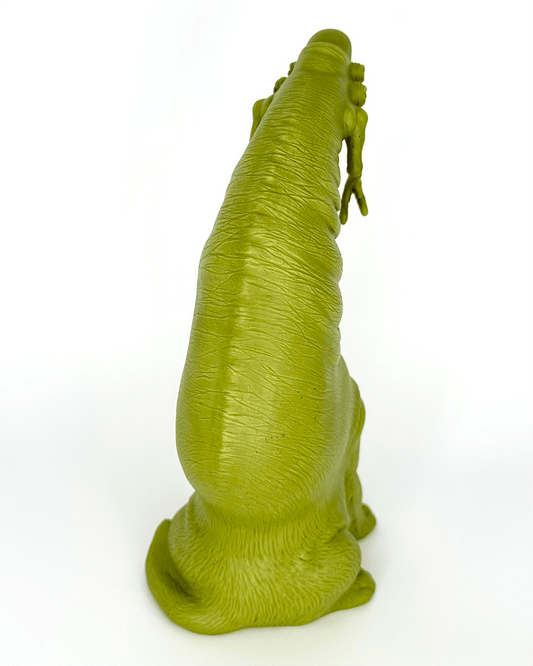
Collection: Abigail Goldman
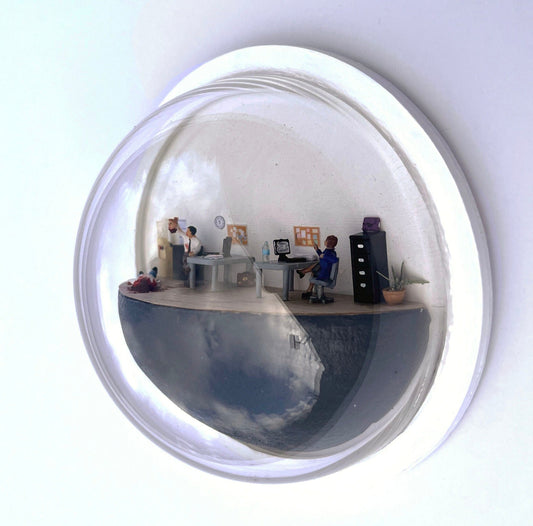
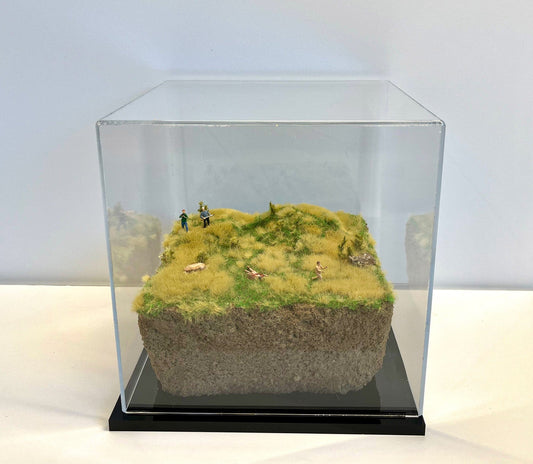
Upon first approach, Abigail Goldman’s carefully crafted dioramas look like something you would see in a history museum or hobbyist display with their neatly manicured green lawns and orderly arranged buildings complete with tiny people, tiny cars and other bespoke props. However, closer inspection reveals absurd mise-en-scenes of grotesque horror and often humourous violence with the viewer left to construct their own narrative in an attempt fill in the blanks. These ‘Dieoramas’ as they are aptly named are the product of Goldman’s life-long fascination with crime and the dark side of the human psyche.
Beginning her career as a newspaper crime reporter and then investigator for the Federal Public Defender in Las Vegas, USA, Goldman now works as an investigator for the Public Defender in Bellingham, Washington. Goldman initially began crafting her imaginary crime scenes in 2011 as a hobby and also as a way of decompressing and detaching from her day job. However, it didn’t take long before her miniatures went viral on Reddit, with photos of her work quickly amassing hundreds of comments and tens of thousands (now, millions) of views. Almost overnight, her work began selling out in art galleries and she had a waiting list for her work.
Rendered in a scale of 1:87, Goldman’s Dieoramas range between 4 inches and 4 feet long, with her human figures smaller than an inch tall. Using elements from train model kits, craft and hardware stores, found materials, and real dirt from Las Vegas, Goldman constructs these miniature scenes with tweezers and a magnifying glass. After adding her trademark dash of red acrylic paint in lieu of blood, she seals them with a perspex case.
Despite her professional involvement in the criminal justice system, Goldman never portrays real life cases, instead opting for a ‘fantasy’ or fictional version of the realities that lie beneath the pristine facades of American suburban life. Implicit in these scenes is a strange relationship between the mundane and the sensational, where everyday domestic scenes such as sunbathing, picnics and children’s birthday parties are contrasted with gruesome violence, blood splattered surfaces and battered victims. Goldman portrays an unendingly inventive repertoire of grotesque acts of violence from lawnmowers riding over figures to barrels with dismembered bodies, limbs sticking out of car trunks, bodies skewered by stakes to victims of axes, saws and guns. As a viewer, there is uncomfortable tension between attraction and repulsion or what is known as the ‘car crash’ effect, where despite their better self one takes an almost perverse fascination with carnage in front of them.
There is also an element of humour or comic relief in these scenes which helps to offset the violence. In the tradition of tragicomedy, Goldman says ‘‘ I think when people see that monster lurking inside of them, modelled and then put in a box and contained, I think that tension is what causes people to laugh’. A kind of emotional catharsis also occurs with the viewer when they witness the painstaking care and consideration of the dioramas’ construction violated with these messy and emotionally wanton acts.
Goldman’s Dieoramas also present a sobering commentary on the pervasive violence in our world and highlight how through media and entertainment we have quickly become desensitised to it. In Goldman’s words, grotesque violence has become America’s ‘number one cultural export’. Refraining from a didactic or admonishing approach, Goldman simply shows that violence is indiscriminate in its effects and in some ways is perhaps an extreme manifestation of familiar emotions that we all deal with, such as anxiety, anger and fear. As a viewer, there is a closeness and intimacy involved with looking in on a miniature world, ‘up close and personal’ so to speak. It allows us the opportunity to view the violent tendencies of our species in a ‘contained’ manner, like observers of our own world or outsiders looking in.
Goldman’s work has been exhibited internationally and featured in multiple print publications, including NPR, Juxtapoz, Atlas Obscura, the L.A. Times and the Huffington Post among others. She has also been the subject of an award-winning documentary for Topic magazine.

Photo of Abigail Goldman with a dieorama.
Goldman had a solo exhibition, Everyday Animals, at Beinart Gallery in 2020, and has contributed to group shows, Miniature Art in 2020 and Dark Art 2021.
Please contact us if you would like to buy an original sculpture by Abigail Goldman or to be notified when we have new available art for sale.


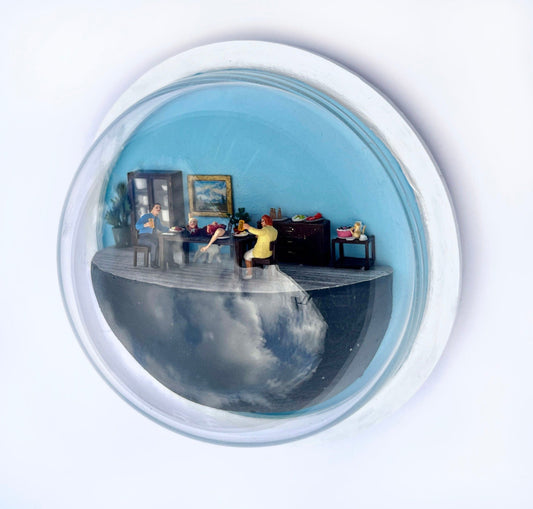

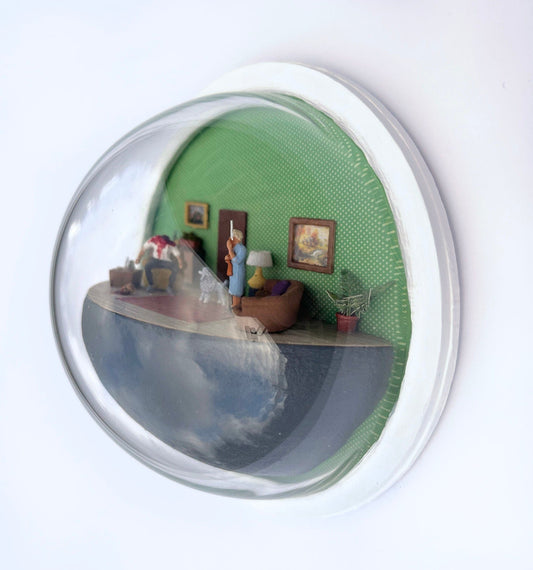

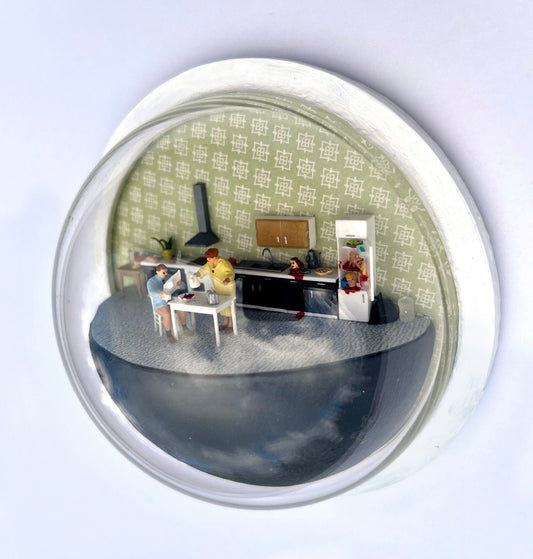





Original Art Inventory
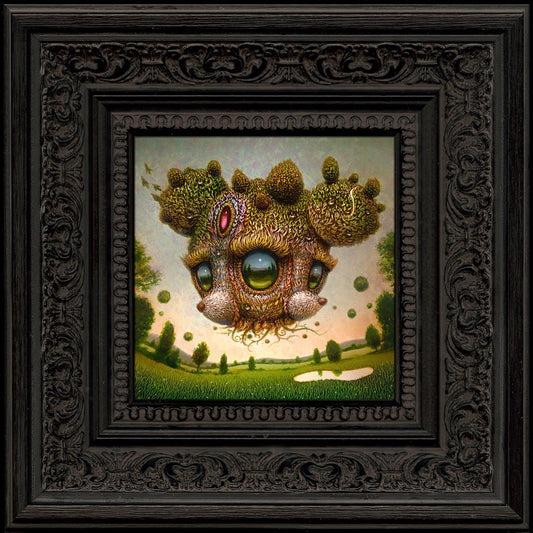
Naoto Hattori - 'Harmony with Nature 027' - acrylic on board
Beachghost - 'Lady of the Lake (Mew)' - watercolour and Ink on cotton rag
Beachghost - 'Dragonslayer Xanthe' - ink and watercolour on cotton rag paper
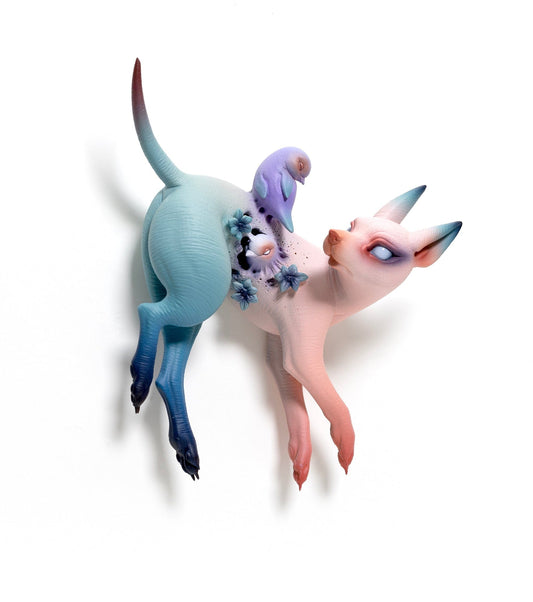
Erika Sanada - 'Bond' - ceramic and cold finish
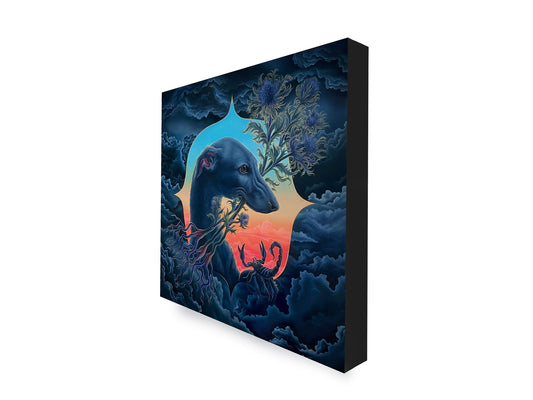
Ellie Davies - 'The Stinger' - oil paint on wooden panel
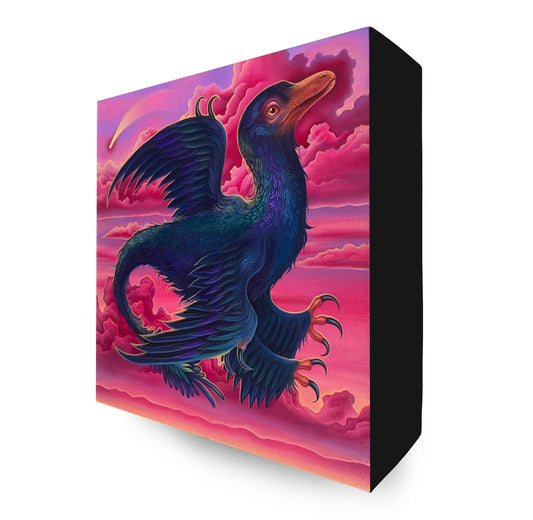
Ellie Davies - 'Microraptor' - oil paint on wooden panel
Clare Toms - 'Honour' - oil on board
Thrift Creeper - 'Some Kind of Doodle or Something' - polymer clay, Apoxie sculpt, ceramic, acrylic